

Our November 2025 Inaugural trip to Brazil, in the the Recôncavo region of Bahia a historic and living site of quilombos. Quilombos (and palenques in the spanish-speaking world) are historically formed and still-existing self-emancipated African communities formed through resistance, collective land, and ongoing defense of autonomy, and culture.
In this newly launched newsletter I share news, views and stories from Black Latin America as well as insights, observations and information from and about our AfroLatinx Travel group trips!
Salvador Bahia has especially been promoting and pushing Black travelers to visit the state, São Paulo has as well.
In Recôncavo, during and after slavery, the region’s dense plantation economy, especially sugarcane, and geography made it a key area where enslaved Africans self-emancipated and formed quilombos. Similar to palenques, Quilombos are Afrodescendant communites in Brazil formed through resistance to slavery and colonial violence, grounded in collective land stewardship, ancestral knowledge, and ongoing struggles for autonomy, culture, and survival. Today, the Recôncavo is home to numerous quilombola communities that continue to exist, organize, and assert land rights, cultural practices, and political presence. They are ongoing sites of Black life, memory, and struggle, where traditions like candomblé, samba de roda and oral histories and kinship networks remain deeply embedded. Today, there are thousands of quilombola communities across Brazil today, estimates range from 3,000 to 6,000+ communities. Quilombos are concentrated most heavily in Brazil’s Northeast. Many are located in states like Maranhão with the largest number of quilombola localities, about 2,025, ~24% of the national total, Bahia with around 1,800+ communities, Minas Gerais and Pará.
Quilombo Kaonge, located within the Vale do Dendê a broader dendê-producing territory that holds multiple quilombos, of the Recôncavo Baiano. Kaonge is a sovereign quilombo territory forged through maroonage and shaped by ancestral knowledge, collective labor, and Black women’s leadership. Quilombos are not relics of the past but ongoing projects of freedom, rooted in land, food sovereignty, memory, and political struggle. To be here is to witness how African descended communities continue to defend territory, transmit knowledge, and build futures built on freedom as continuous, intentional praxis. Antiblackly enough, in Argentina, “quilombo” is often used colloquially to mean “chaos” or a “mess”—a telling distortion of a term rooted in Black resistance, autonomy, and community. Argentines have steadily been in the Brazilian headlines over the past couple years and more intensely within these past few months for expressing their culture of racism (see more below).
What are the enduring continuities of the quilombo, and how might we meaningfully draw from—and embody—them in the present?
Quilombismo is a Black political philosophy rooted in quilombo experiences (especially Palmares) as models for collective life, survival, culture, self-determination, mutual care, and resistance to racial capitalism and colonial power.
“The history of the Quilombo of Palmares represents one of the most important experiences of Black political organization in Brazil.” -Lélia Gonzalez
Quilombismo is a political, cultural, and philosophical concept conceptualized and popularized by Afro-Brazilian activist and thinker, Abdias do Nascimento, developed most clearly in his 1980 book “O Quilombismo.” It draws inspiration from the historical quilombos, autonomous communities founded by self-emancipated Africans across Brazil and Latin America as living examples of Black resistance, self-determination, and collective life. Clóvis Moura provided crucial historical analysis of quilombos as systems of organized resistance. Quilombo pedagogy emerges from the historical formation of quilombos in Brazil as spaces of collective survival, autonomy, and world-making. It is not a formal “school” model, but a practice of knowledge transmission rooted in Black life itself.
Amerificanidade conceptualized by Lélia González a Brazilian intellectual, anthropologist, and activist whose work offered foundational frameworks for Afro-Latin American feminist, racial, and decolonial thought. One of her key conceptual contributions is the phrase Améfrica Ladina, (Afro-Americanness) as a category that acknowledges how African diasporic, Indigenous, and mixed communities shape cultural, historical, and political identities, challenging the whiteness and Eurocentrism embedded in Latin American narratives.
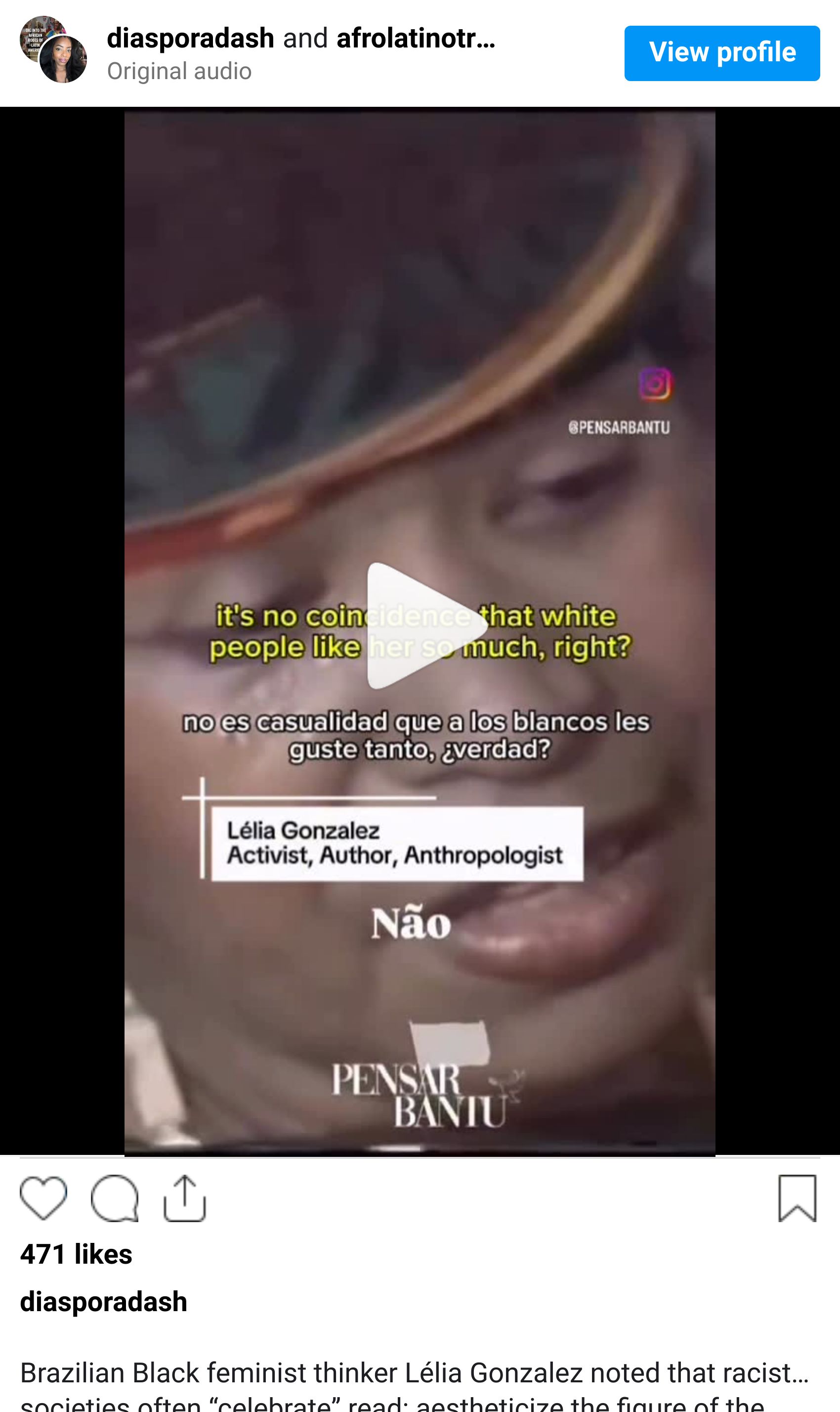
Quilombo as Political Model: Nascimento reimagined the quilombo not only as a historical refuge from slavery but as a symbol of freedom and anti-colonial organization. In his view, the spirit of the quilombo could serve as the foundation for modern Black liberation movements—spaces where Black people govern themselves, preserve cultural traditions, and build economies of solidarity.
Intersection of Race, Gender & Class: González places Black women at the center of her analysis, showing that racial and gendered systems of oppression cannot be separated. She critiques patriarchal and racist structures simultaneously—an intersectional insight ahead of many mainstream discussions.
Blackness Beyond Borders
Black Self-Determination: Quilombismo centers autonomy, cooperation, and collective identity over assimilation into the dominant white-supremacist order. It calls for the reconstruction of society around African values of community, reciprocity, and respect for life.
Cultural and Ethical Project: Beyond politics, it’s also a spiritual and ethical vision—a commitment to decolonizing the mind, restoring African diasporic heritage, and transforming Black consciousness into action.
Black Internationalism and Decolonial Dimensions: Gonzalez and Nascimento linked the Brazilian struggle to the global African diaspora, seeing quilombismo as part of the broader Pan-African movement, a continuation of resistance that connects Africa, the Americas, and the Caribbean.Quilombismo and Amefricanidade are memory and imagination: it honors the historical legacy of fugitive communities while envisioning new social, political, and cultural futures rooted in Black autonomy and solidarity.
“Quilombos did not represent simple flight, but an alternative form of social organization.” -Lélia Gonzalez, “Racismo e sexismo na cultura brasileira” (1984)
On our AfroColombia trip in August 2025, Elena Hinestroza our host for our time at her space L’Azotea de La Abuela (the Roof of the Grandmother)spoke about how Quilombo Pedagogy was a topic during Petronio 2024. I am working on a reel about how I see spaces like L’Azotea de La Abuela (the Roof of the Grandmother) in the Oriente (east) of the city of Cali, Colombia mirrors places like The House of Tia Ciata in Rio, Brazil. Both cultivate and reproduce space for and of African continuity.
Tia Ciata (Hilária Batista de Almeida) was a key figure in the formation of samba in Rio de Janeiro, whose home served as a gathering space for early musicians. A mãe de santo, she protected and sustained Black cultural life, where samba and Candomblé existed as intertwined practices of community, spirituality, and resistance.
Quilombo Pedagogy’s circulation across Latin America is heartening, not as abstraction, but as a lived and evolving framework grounded in Black territorial knowledge, collective memory, and practices of autonomy that exceed the limits of formal education. It signals a broader diasporic recognition that quilombos and worldviews that inform world-building are ongoing sites of knowledge production, where Black communities continue to theorize, teach, and sustain ways of living otherwise.
Experience it for yourself: Take $50 off our November 17-24 AfroBrazil group trip if you sign up by May 1st! Fill out our interest form to be considered!
And Her Daddy Racist Too! (pretends to be shocked)
Racist Argentine lawyer that went to jail for being racist while her father was also filmed being racist maintains she’s not racist 😀

Like father, like daughter. The father’s partner maintains he was “under the effects of alcohol",” highlighting that there will always be just one more excuse, one more justification, one more rationalization, one more evasion for racism. All to never actually have to confront or deal with it, because why should they? It isn’t anything to “correct” for them.
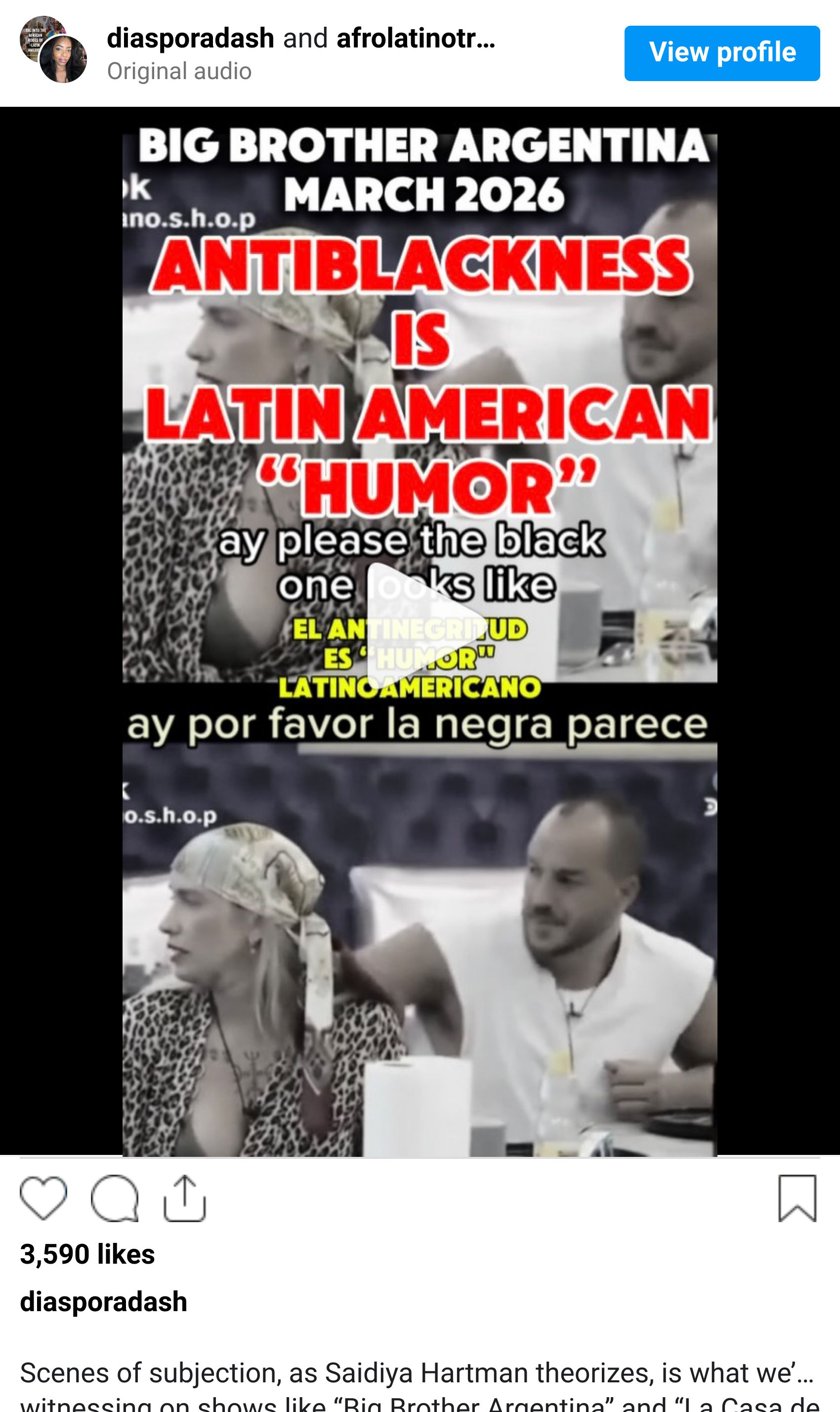
Less than 24 hours after racist Argentine lawyer Agostina Páez returned home from Rio de Janeiro for directing racist insults and making monkey gestures in a bar in Ipanema videos began circulating of her father, businessman Mariano Páez, at a bar making the same gestures. He was filmed shouting that he has “disgust for the state,” and in another video claiming he paid roughly $19,000 bail to secure her release. Agostina Paez had been detained for over two months, monitored with an electronic ankle bracelet after her January 2026 arrest for the aforementioned racist aggressions, which under Brazilian law, falls under racial injury (injúria racial), which is treated as a serious criminal offense. The repetition is prescriptive and instructive: racial animus doesn’t emerge in isolation, it moves through lineage, through family, and through culture and its transmission. Páez’s case follows a 2024 incident in which Argentine soccer players were detained in Brazil for racist taunts, and sits alongside recent moments like a Paraguayan Big Brother Argentina contestant referring to another Angolan contestant, as a “recently bought slave.” And to be clear, Argentina is not exceptional in this—this is not an aberration but expressions of how deeply embedded racism is across the region.

“Is the Brazilian state going to arrest itself?!?!??!”
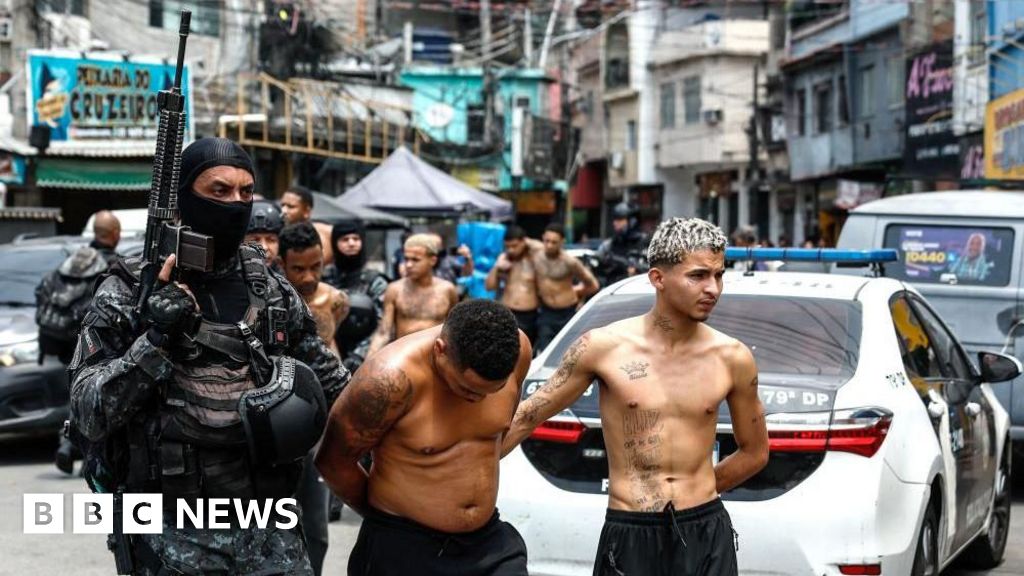
This all unfolds amid a visible surge of Argentine tourism to Brazil; Rio during my visit during carnival felt overrun with Argentines and upon my return to Panama there was an announcement about Buenos Aires-bound flight being completely full. While Brazil has some of the “strictest anti-racism laws on paper,” I’m not convinced they meaningfully shift the terrain—at best they might make someone think twice before speaking, but even that feels generous. If anything, people seem emboldened, treating racism like an entitled right. The bigger question is: is the Brazilian state going to arrest itself? These laws read more as performative—symbolic gestures the state can point to as “proof” of action—while the structural conditions that produce and sustain racism remain largely untouched.
Upon her return, landing to a barrage of reporters, between white tears, Páez stated, “I was very afraid… I was terrified of going to prison,” adding that she “regret[s] reacting badly and behaving the way [she] did,” framing the incident as “a moment” in which she “reacted in a way that [she] shouldn’t have.” She maintains that she is “not a racist and it wasn’t her intention to discriminate” and that she “reacted that way” and that “women will understand”—girl, whatever— this is a familiar deflection where white womanhood is mobilized as a shield, invoking gendered vulnerability to excuse racist behavior, as if Black women do not exist within those same gendered realities.
A racist lawyer calls into question the integrity of the legal system itself, underscoring how antiblack racism is reproduced within the very professions tasked with upholding rights and justice, raising deeper questions about what it means when those positioned to interpret and defend the law are themselves enacting racial harm.
What’s next: We are planning group trips to Argentina and Uruguay to highlight Afrodescendants in both of these countries. Interested? Let us know!
Catch Me Yapping
On The Maverick Show podcast and an R29 Somos feature


MUTUAL AID FOR AFROCUBANS
I have a mutual aid effort to support Afro-Cubans navigating the ongoing material and infrastructural crises on the island—centering direct, community-based support that moves resources where they are most needed. If you would like more information and to support, email me at [email protected]
RESEARCH! RIGOR! REFERENCE!
More resources from me
Media referenced in this post:
In this newly launched newsletter I share news, views and stories from Black Latin America as well as insights, observations and information from and about our AfroLatinx Travel group trips!